What Is the Best Caravan Battery to Buy?

Time:2026-11-15 Author:Oliver
0%

Choosing the best Caravan Battery starts with your travel habits, not a label on the case. Do you camp without hookups, run a compressor fridge overnight, or mainly need lights and device charging? Those details determine the capacity and chemistry worth paying for. The RV Industry Association’s 2024 Year-End Report recorded 333,733 recreational vehicle shipments in the United States. That figure is not a measure of caravan-battery sales, but it shows the scale of the touring market and why reliable off-grid power matters to many owners.

Battery educator Isidor Buchmann, founder of Battery University, has written extensively about battery chemistry, charging, and operating limits. In paraphrase, his practical lesson for buyers is: “Match the battery to its charging system and real-world use.” This is a summary, not a verbatim quotation. It is also easy to overlook. A lithium battery may offer more usable capacity and lower weight, yet it can be a poor fit for an incompatible charger or a cold-weather setup. Lead-acid batteries can cost less upfront, but usable capacity and maintenance deserve attention. Victron Energy’s technical documentation provides useful guidance on charging profiles and battery specifications; compare those figures with your caravan’s charger and expected loads. A rating alone is not enough. A 100 Ah label does not tell the whole story.

This guide will compare battery types, usable capacity, charging compatibility, lifespan, and cost. It will also flag the awkward part: the “best” choice may be heavier, pricier, or less convenient than expected. Check your actual setup before buying.
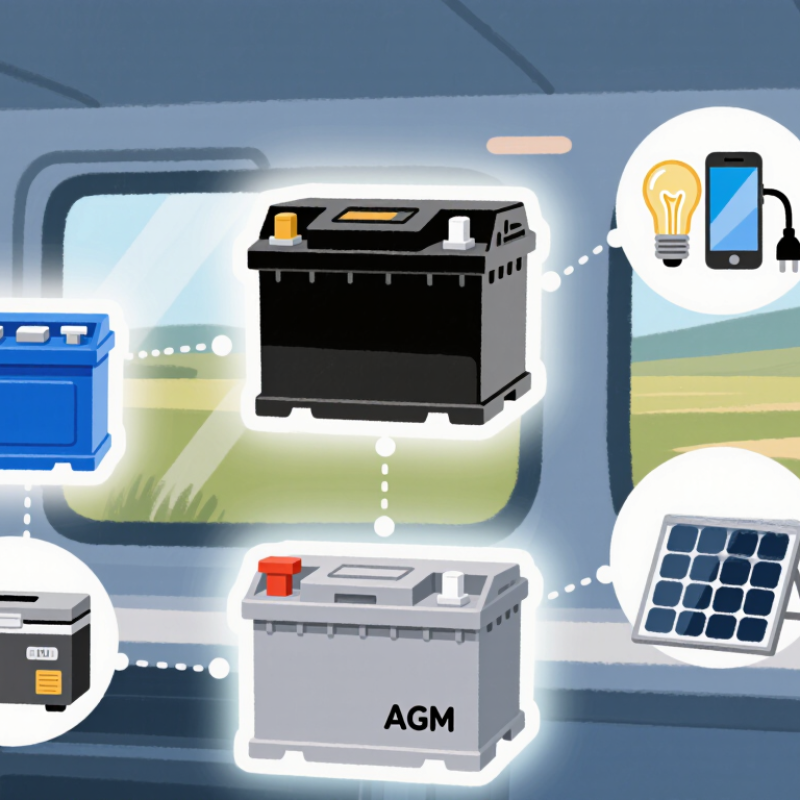
What Is the Best Caravan Battery to Buy?

Assess Daily Power Needs Using Watt-Hours and Appliance Loads

What Is the Best Caravan Battery to Buy?

Assess Daily Power Needs Using Watt-Hours and Appliance Loads

Choosing a caravan battery starts with measuring what you actually use, not guessing from appliance names. Check each appliance’s wattage and estimate its daily running time. Multiply watts by hours to get watt-hours. A 40-watt light used for five hours consumes about 200 watt-hours. A small fridge may run intermittently, so its label rating alone can overstate its daily use. Add the loads together. Include phone charging, water pumps, and any inverter-powered devices.

A sample day might total 900 watt-hours, but leave room for uncertainty. My first estimate would probably miss a forgotten device or a longer evening of lights. Allow extra capacity rather than sizing the battery exactly to the calculation. If appliances use an inverter, account for conversion losses; the actual battery draw will be higher than the appliance’s stated consumption. Then compare the required energy with the battery’s usable capacity, not just its advertised total. Usable capacity varies by battery type and recommended discharge limits, so verify the specifications. Cold weather and cloudy days can also change your plan. Keep a simple usage log for a few trips; real readings often correct tidy calculations.

Compare 12 V Lead-Acid and 12.8 V LiFePO₄ Battery Chemistries

What Is the Best Caravan Battery to Buy?

A 12 V lead-acid battery and a 12.8 V LiFePO₄ battery suit different travel habits. Lead-acid usually costs less upfront, but its weight can be noticeable when lifting it into a caravan locker. For longer life, it is commonly used with only about half its rated capacity discharged. Battery University’s technical note “BU-201: How does the Lead Acid Battery Work?” reports roughly 500 cycles at 50% depth of discharge for a typical deep-cycle battery. Actual results vary with temperature, charging, and maintenance.

LiFePO₄ generally weighs less and offers more usable capacity in the same rated amp-hour size. Battery University’s “BU-205: Types of Lithium-ion” lists LiFePO₄ at about 2,000 cycles; treat this as a guide, not a promise. That extra usable energy can keep a fridge running longer overnight. There is a catch. Check that the caravan’s charger and monitoring system support the battery’s charging profile, and confirm low-temperature charging protection. A 12.8 V label does not guarantee compatibility with every 12 V setup. If the van is used for short trips, the higher purchase price may not pay back quickly. I’d compare usable watt-hours, weight, warranty terms, and charging needs—not just the number printed in amp-hours.

Size Capacity for Usable Energy: 50% DoD for Lead-Acid, 80%+ for LiFePO₄

When choosing a caravan battery, compare usable energy, not just the capacity printed on its case. For routine use, a 100 Ah lead-acid battery may provide about 50 Ah. That assumes a discharge limit near 50% DoD, or depth of discharge. A 100 Ah LiFePO₄ battery may provide 80 Ah or more at 80% DoD, depending on its specifications. Check the rated usable capacity, temperature limits, and battery-management system. Cold mornings and high current draw can reduce the energy available. Small details matter.

Imagine your fridge, lights, and water pump use around 40 Ah in a day. A 100 Ah lead-acid battery leaves little room for cloudy weather or an extra night without charging. The same nominal capacity in LiFePO₄ may offer a more comfortable buffer. But don’t guess. Estimate each appliance’s daily use, then allow extra capacity because real consumption varies. A rough load calculation is rarely perfect, and it is easy to forget small loads like control panels or charging devices. Also check that your charger supports the battery chemistry; a larger usable reserve does not help if the battery cannot recharge properly.

Check Charger, Solar, and Alternator Compatibility Before Buying

A caravan battery is only a good fit if your charging equipment can charge it correctly. Before comparing capacity, check the battery’s voltage and chemistry against your mains charger’s settings. A charger designed for one battery type may undercharge another or apply an unsuitable charging profile. Read both manuals, not just the product label. Small details matter.

Then check the solar controller’s supported chemistry, voltage, and maximum charging current. If your panels connect through a controller, the controller—not the panels alone—must suit the battery. For alternator charging, confirm the vehicle’s system is compatible with the battery and its charging limits. Some installations need a suitable DC-to-DC charger, particularly when the battery chemistry differs from the starter battery. Do not assume the alternator will manage every setup safely.

It is tempting to buy the largest amp-hour rating available. That can be a poor choice if your charger cannot replenish it during a typical trip. Compare the battery’s recommended charge current with what your charger, solar system, and alternator setup can actually provide. Check cable size, fuses, and installation guidance too; these are easy to overlook. If specifications conflict or remain unclear, ask a qualified installer to verify the system before purchase.

What Is the Best Caravan Battery to Buy? - Check Charger, Solar, and Alternator Compatibility Before Buying

Battery type Typical usable capacity Weight and lifespan Mains charger compatibility Solar compatibility Alternator compatibility Best suited to
Flooded lead-acid Often around 50% of rated capacity for regular use, to help limit wear. Heavy; lifespan depends strongly on discharge depth, charging, temperature, and maintenance. Requires ventilation and periodic maintenance. Use a lead-acid charging profile with settings suited to flooded batteries. Equalization should only be used when the battery maker permits it. Works with a solar controller configured for flooded batteries. A controller prevents overcharging and should match the panel voltage and current. Generally compatible with a correctly wired charging system. Check wiring, fusing, and the vehicle's charging voltage. Budget-conscious users who can accommodate the weight, ventilation, and maintenance.
AGM lead-acid Often around 50% of rated capacity for regular use; the maker may specify a different limit. Heavy; sealed and usually maintenance-free. Like other lead-acid batteries, frequent deep discharges can shorten service life. Choose an AGM-compatible profile. Absorption and float settings vary, so follow the battery specifications rather than relying on a generic setting. Compatible with a controller that supports AGM charging and is correctly sized for the solar array. Usually works with suitable vehicle charging equipment. Confirm the battery's charging limits and the vehicle's charging behavior. Owners wanting a sealed, low-maintenance battery and who have enough payload capacity.
Gel lead-acid Often around 50% of rated capacity for regular use; actual guidance depends on the model. Heavy and sealed. Charging outside the specified voltage range can damage the gel electrolyte. Requires a gel-specific profile. Do not use an equalization setting unless explicitly approved by the battery maker. Use a solar controller with a gel profile and charging voltages within the battery's stated limits. Check that the vehicle charging system stays within the battery's limits; additional regulation may be needed. Users whose existing charger supports gel and who prioritize a sealed lead-acid design.
LiFePO₄ (lithium iron phosphate) Often about 80–100% of rated capacity is usable, subject to the battery's specifications and system settings. Typically much lighter than a similar-capacity lead-acid battery and often supports more charge cycles, depending on usage and operating conditions. Requires a battery management system (BMS). Requires a charger with a lithium profile and voltage limits approved for the battery. Disable lead-acid equalization; use float charging only as directed by the maker. Use a controller with a lithium profile, or configurable settings that match the battery limits. Check controller output current and the battery's maximum charge current. A DC-to-DC charger is commonly recommended to control current and provide an appropriate charge profile, especially with smart alternators. Check alternator capacity and wiring. Frequent off-grid use, weight-sensitive caravans, or users seeking more usable capacity—provided the charging system is compatible.
Before buying: Match the battery's nominal voltage to the caravan system; verify the charger's chemistry setting, solar controller profile and current rating, and alternator charging method. Check battery dimensions, terminal type, permitted charge current, and warranty conditions. LiFePO₄ batteries generally must not be charged below 0°C unless the battery has an approved low-temperature charging system or its specifications explicitly allow it. Charging voltages and usable-capacity limits vary by model, so the battery manufacturer's instructions take priority.

Match Battery Weight, Cycle Life, and Cost to Your Caravan Use

What Is the Best Caravan Battery to Buy?

The right battery depends on how you travel and what you run. A weekend trip with lights and a water pump needs less capacity than several days off-grid with a fridge and inverter. Write down each appliance’s wattage and likely daily use before comparing batteries. Rated amp-hours alone can be misleading: usable capacity depends on battery chemistry, operating conditions, and the manufacturer’s limits.

Weight matters. A lighter battery can preserve payload for food, water, and camping gear, but check your caravan’s payload and axle limits before upgrading. Lithium batteries are often lighter and allow more usable capacity, though their purchase price is usually higher. Lead-acid options may cost less upfront, but comparable usable energy can require a heavier or larger battery bank. Check charger compatibility too; an unsuitable charging setup can reduce performance or shorten battery life.

Cycle life helps put cost in context. Compare published cycle figures at a similar depth of discharge, since test conditions differ. Then estimate cost per usable kilowatt-hour over the battery’s expected service life, rather than comparing purchase prices alone. A larger battery is not automatically better. For example, if your fridge runs overnight but the caravan returns to mains power each day, extra capacity may sit unused. I would still leave a practical reserve: real usage rarely matches a tidy estimate.

FAQS

How do I estimate my caravan’s daily power use?

Multiply each appliance’s watts by its daily running hours. A 40-watt light used for five hours consumes about 200 watt-hours. Add the fridge, pump, chargers, and other devices. Keep a usage log; estimates miss things.

Is a 100 Ah battery enough for a caravan?

It depends on your daily use and the battery’s usable capacity. A 100 Ah lead-acid battery may offer about 50 Ah at a 50% discharge limit. A 100 Ah LiFePO₄ battery may offer 80 Ah or more at 80% discharge. Check its specifications.

Why shouldn’t I compare batteries by rated capacity alone?

The printed capacity does not show how much energy you can routinely use. Discharge limits, temperature, and current draw affect usable energy. Compare usable capacity instead. Small details count.

How much extra capacity should I allow?

Leave room for cloudy days, longer evenings, and forgotten loads. A fridge, lights, and pump might use about 40 Ah daily. My first estimate could still miss a control panel or phone charger.

What should I consider if my appliances use an inverter?

Inverters lose some energy during conversion, so battery draw exceeds the appliance’s stated consumption. Include those losses when estimating your needs. Check the inverter’s requirements, too.

Does battery weight matter when choosing a caravan battery?

Yes. A lighter battery can leave more payload for food, water, and camping gear. Check your caravan’s payload and axle limits before changing the battery. Weight adds up.

How should I compare battery cost and cycle life?

Compare cycle-life figures at similar discharge depths because test conditions vary. Consider cost per usable kilowatt-hour over the expected service life. The cheapest purchase price may not be the lowest long-term cost.

Do I need a compatible charger?

Yes. Check that your charger supports the battery’s chemistry and charging requirements. An unsuitable setup can reduce performance or shorten battery life. It’s easy to overlook.

Conclusion

Choosing the best Caravan Battery starts with understanding how much power you use each day. Add up the watt-hours required by your appliances, then consider how long you need to run them between charging opportunities. This gives you a practical basis for comparing 12 V lead-acid batteries with 12.8 V LiFePO₄ options. Chemistry affects usable capacity: a lead-acid battery is generally sized around 50% depth of discharge, while LiFePO₄ can typically provide 80% or more, so compare usable energy rather than relying on the battery’s stated capacity alone.

Before buying, confirm that your caravan’s charger, solar setup, and alternator can charge the battery appropriately. Also weigh the battery’s physical weight, expected cycle life, and purchase cost against how often and where you travel. A lighter battery with a longer service life may suit frequent trips, while a lower upfront cost may matter more for occasional use. The right choice balances daily power needs, system compatibility, and long-term value.


Oliver

Oliver

Oliver is a seasoned marketing professional with a wealth of expertise in driving brand awareness and engagement. With a deep understanding of our company's product offerings, he consistently delivers high-quality content that enriches our professional blog. His insights not only shed light on......