How to Choose the Right Scooter Battery?

Time:2026-11-08 Author:Sienna
0%

Choosing the right Scooter Battery starts with more than matching a number on a label. The battery must fit your scooter’s voltage requirements, available space, connector, and expected riding range. A mismatch can mean poor performance or an installation that simply will not work. Check the owner’s manual and the battery markings before comparing options.

Battery researcher Jeff Dahn’s work focuses on lithium-ion performance and aging. I can’t verify a direct quotation from him about choosing scooter batteries, so I won’t invent one. His field offers a useful reminder: battery life depends on chemistry, use, and charging conditions—not capacity alone. In practical terms, consider the route you ride, your rider-and-cargo weight, hills, weather, and how often you can recharge. A short, flat commute may need less capacity than a longer route with steep climbs. Range estimates can be optimistic. Leave room for that.

This guide will explain how to compare voltage, amp-hours, watt-hours, battery chemistry, and physical compatibility. It will also cover charger matching, safety features, warranty terms, and signs of a trustworthy seller. Look closely at the label. Ask for clear specifications, not vague promises. The right choice should feel unremarkable: it fits securely, charges with the correct charger, and supports your real daily ride. A little uncertainty remains, especially when brands publish limited test details. That is worth noticing.
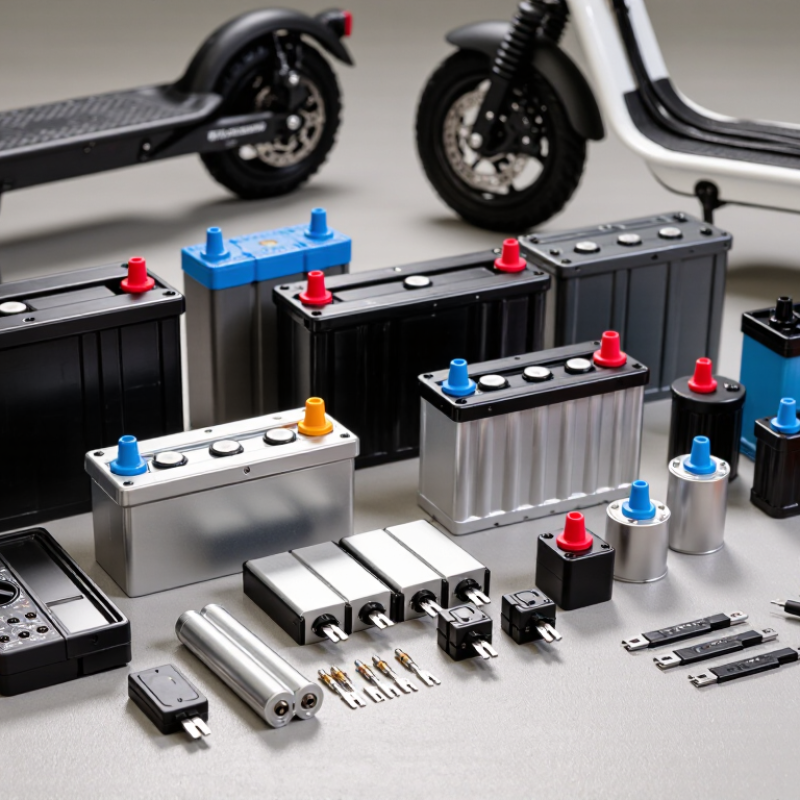
How to Choose the Right Scooter Battery?

Identify Your Scooter’s Battery Requirements

Before choosing a replacement, identify the battery your scooter is designed to use. Check the manual, the battery label, or the specifications printed near the charging port. Note the nominal voltage, capacity in amp-hours, chemistry, and physical dimensions. Voltage matters most. The replacement voltage must match the scooter’s system; a higher number is not a harmless shortcut. Capacity affects expected range, but a larger battery may not fit or suit the scooter’s controller. Measure the battery compartment, including its depth and cable clearance.

Check the connector shape and polarity, too. Two plugs can look alike while placing positive and negative contacts differently. Confirm that the battery’s discharge rating can meet the scooter’s current demand, and use a charger compatible with its chemistry and voltage. A faded label or an old repair can make these details uncertain. Don’t guess. Take clear photos of the label, connector, and compartment, then compare them with the manual or ask a qualified repair technician. Also consider how you ride: frequent hills, a heavy load, or cold weather can reduce practical range. Published capacity helps, but real-world performance may be lower than expected.

How to Choose the Right Scooter Battery? - Identify Your Scooter’s Battery Requirements

Battery specifications vary by scooter model. Treat the ranges below as general reference only, and confirm voltage, dimensions, connector, and battery chemistry against the scooter’s manual or existing battery before buying.

Scooter Type Common System Voltage Indicative Capacity Range Battery Chemistry Often Used What to Verify
Compact electric kick scooter 24–36 V nominal About 5–10 Ah Lithium-ion Match the original voltage and pack dimensions. Check connector polarity, discharge-current rating, and battery-management-system compatibility.
Everyday commuter electric scooter 36–48 V nominal About 7.5–20 Ah Lithium-ion Confirm the exact nominal voltage and maximum charge voltage. For example, many 36 V lithium-ion packs charge to 42 V, while many 48 V packs charge to 54.6 V.
Higher-power or longer-range electric scooter 48–60 V nominal About 15–30 Ah Lithium-ion Check that the battery can supply the controller’s required continuous and peak current. Confirm mounting space, wiring, BMS limits, and charger specifications.
Electric mobility scooter Usually 24 V; some models use other configurations About 12–35 Ah per battery Sealed lead-acid or lithium, depending on the model Many 24 V systems use two 12 V batteries connected in series. Match chemistry, capacity, battery size, terminal type, and the charger’s supported battery type.
Small seated electric scooter 24–48 V nominal About 8–20 Ah Lithium-ion or sealed lead-acid Identify the installed chemistry and pack arrangement before replacement. Do not assume that a battery with the same voltage will fit or work with the original charger.
Quick selection checklist: Match nominal voltage and chemistry; check pack dimensions, connector and polarity; meet or exceed the required current rating; and use a charger specifically compatible with the battery chemistry and voltage. Higher Ah generally means more stored energy, but does not guarantee a particular range.

Compare Battery Types and Their Key Characteristics

Lead-acid batteries usually cost less upfront, but their weight can make a scooter awkward to carry upstairs. They also tend to provide less usable energy for their size. Nickel-rich lithium-ion batteries, often using NMC chemistry, can pack more range into a smaller case. They need well-designed battery management and thermal controls. LFP batteries generally trade some energy density for longer cycle life and greater thermal stability. Neither chemistry is automatically safer in every scooter; cell quality, pack design, and charging habits matter.

The International Energy Agency’s Global EV Outlook 2024 reports that LFP reached about 40% of the electric-car battery market in 2023, roughly twice its 2020 share. That figure describes cars, not scooters, but it shows how widely the chemistry is being adopted.

BloombergNEF reported average lithium-ion pack prices of $139 per kilowatt-hour in 2023, down 14% from 2022. Treat this as industry context, not a quote for a replacement scooter battery.

Compare the battery’s rated voltage with the scooter’s required voltage, then check amp-hours or watt-hours for usable capacity. A larger number does not guarantee more real-world range: rider weight, hills, cold weather, and tire pressure all affect it. Check the charger compatibility, warranty terms, and replacement availability before buying. A small but easy-to-miss detail: two packs with similar capacity may differ in weight, connector, and protection circuitry. I would not choose by chemistry alone.

Match Voltage, Capacity, and Range to Your Needs

How to Choose the Right Scooter Battery?
Match Voltage, Capacity, and Range to Your Needs

Voltage must match the scooter’s electrical system; a higher number is not an automatic upgrade. Capacity, measured in amp-hours, tells you how much charge the battery stores. Multiply volts by amp-hours to estimate energy in watt-hours. A 36-volt, 10-amp-hour battery stores about 360 watt-hours. That is the useful comparison.

Range is not a promise. As a planning example, if your scooter uses 20 watt-hours per kilometre, 360 watt-hours suggests 18 kilometres before real-world losses. Keep a reserve for hills, cold weather, heavier loads, and battery aging. A 20–30% buffer is sensible, though your route may demand more. Small details matter. Tyre pressure matters, too.

The UK Department for Transport’s 2022 evaluation of e-scooter trials reported more than 14 million trips, reflecting substantial real-world use, much of it for short urban journeys. For a commute, measure your round-trip distance, then add a buffer rather than buying capacity blindly. Check the scooter’s specified voltage and connector before replacing a battery. I’d question any range estimate that omits rider weight or temperature; those omissions make neat calculations look more certain than they are.

Check Battery Size, Connectors, and Compatibility

How to Choose the Right Scooter Battery?

A battery can look right and still be incompatible. Start with the scooter’s required voltage, usually printed on its original battery label or in the manual. Match it exactly; a different voltage can damage the controller or create unsafe operating conditions. Then measure the battery compartment, including its length, width, and height. Leave room for wiring and the casing. A few millimeters matter.

Check the connector shape, pin count, and polarity before ordering. Two plugs may look similar but have different wiring. Compare the battery’s rated capacity in amp-hours with the original specification, too. Higher capacity may extend range, but only if the battery fits and the scooter’s charging system supports it. The International Energy Agency’s Global EV Outlook 2024 reports that electric-vehicle battery demand grew about 40% in 2023. That market growth makes clear specifications even more important, not interchangeable parts.

Tips: Photograph the old battery label and connector beside a ruler. Confirm voltage, dimensions, plug, and charging requirements with the scooter manual or a qualified repair technician. Don’t rely on appearance alone. It’s an easy mistake. And if the documentation is incomplete, pause before buying; guessing can cost more than checking twice.

Evaluate Lifespan, Charging, Safety, and Cost

How to Choose the Right Scooter Battery?

Evaluate Lifespan, Charging, Safety, and Cost

Start with lifespan and real-world fit. Battery life depends on chemistry, temperature, charge habits, and how deeply the pack is discharged. Ask the seller for an expected cycle life and warranty terms, not just a mileage estimate. A scooter used for short, flat commutes may age differently from one carrying heavy loads up steep hills. Check that the replacement pack matches the scooter’s voltage, capacity, and battery-management system. Close enough is not enough.

Charging and safety deserve equal attention. Use the specified charger, keep the pack dry, and charge it on a clear, hard surface rather than under a bed or beside curtains. The U.S. Consumer Product Safety Commission warns that lithium-ion battery failures can cause fires; stop using a pack that is swollen, unusually hot, or damaged. For cost context, BloombergNEF’s 2024 Battery Price Survey put the average lithium-ion pack price at $115 per kilowatt-hour. That is a bulk-market benchmark, not a scooter replacement quote: casing, electronics, shipping, and labor can raise the final price considerably.

Tips: Compare warranty coverage and replacement availability. Let a hot battery cool before charging. Keep receipts and note any change in charging time; small clues matter. A little inconvenient, but useful.

How to Choose the Right Scooter Battery? — Evaluate Lifespan, Charging, Safety, and Cost

Typical cycle-life ranges by battery chemistry

How to read the chart: Cycle life is the approximate number of full charge-discharge cycles before capacity falls to around 80% of its original level. Actual results vary with cell quality, temperature, charging habits, and depth of discharge.

  • Charging: Charging time depends on battery capacity, charger output, and the battery’s charging limits. Use the charger specified for your scooter.
  • Safety: Use an undamaged battery and compatible charger; stop charging if the battery becomes unusually hot, swells, or smells unusual.
  • Cost: Compare total ownership cost, not just the purchase price. A battery with a higher upfront cost may last longer, while replacement prices vary by scooter and location.

FAQS

Which details should I check before buying a replacement battery?

Check voltage, amp-hour capacity, chemistry, dimensions, connector shape, and polarity. Photograph the label and compartment if details are unclear.

Does a higher-voltage battery improve scooter performance?

Not necessarily. Match the scooter’s specified voltage; a higher voltage may not suit its electrical system.

What does battery capacity tell me?

Capacity, measured in amp-hours, indicates stored charge. Multiply voltage by amp-hours to estimate energy in watt-hours.

How much energy does a 36-volt, 10-amp-hour battery store?

About 360 watt-hours. That figure helps compare capacity, but it does not guarantee a specific distance.

How can I estimate my scooter’s range?

Divide battery energy by the scooter’s energy use. At 20 watt-hours per kilometre, 360 watt-hours suggests about 18 kilometres before losses.

Why might my real-world range be shorter?

Hills, cold weather, heavier loads, low tyre pressure, and battery age can reduce range. Small details add up.

How much range should I keep in reserve?

A 20–30% buffer is a useful starting point. Your route may need more, especially with steep hills or cold mornings.

What should I do if the battery label or connector is unclear?

Don’t guess. Compare clear photos with the manual or ask a qualified repair technician. I’d be cautious about tidy estimates, too.

Conclusion

Choosing the right Scooter Battery starts with understanding your scooter’s requirements. Check the manufacturer’s recommended voltage, capacity, battery chemistry, and physical dimensions, then consider how you use the scooter. A higher-capacity battery may provide more range, while your typical trip length, rider load, terrain, and riding conditions all affect how far you can travel between charges. Compare battery types by their energy capacity, weight, expected lifespan, and charging needs to find a practical balance.

Before purchasing, confirm that the battery fits the scooter’s compartment and that its connectors and electrical specifications are compatible. Also consider charging time, safe handling and storage, warranty coverage, and replacement cost. A battery that appears powerful may not be suitable if it cannot connect correctly or meet the scooter’s voltage requirements. Matching performance with compatibility, durability, safety, and budget helps you choose a dependable option for everyday use.


Sienna

Sienna

Sienna is a skilled marketing professional with a deep expertise in our company’s core products and services. With a passion for innovation and detail, she plays a pivotal role in crafting insightful blog posts that not only highlight the unique features of our offerings but also provide valuable......