Choosing a Golf Trolley Battery is no longer a simple replacement decision. Golfers now compare lithium-ion and lead-acid systems, charging speed, weight, cycle life, warranty coverage, and cold-weather performance. The market is moving quickly. Grand View Research’s Golf Cart Market Size, Share & Trends Analysis, 2024–2030, identifies battery technology and electric mobility as important growth drivers. Mordor Intelligence also reports continued expansion in the golf cart market, supported by resorts, courses, and low-speed transport applications. These trends matter to global buyers.
Real-world experience still beats attractive specifications. A 48-volt trolley may carry a heavier load than expected. A battery rated for 100 miles may perform differently on hills, wet grass, or winter mornings. Isidor Buchmann, founder of Cadex Electronics and Battery University, emphasizes a basic truth: “Battery life depends on how the battery is used, charged, and maintained.” The advice sounds obvious. It is often ignored.
This guide examines seven buying tips for international purchasers. It considers capacity, voltage matching, battery chemistry, charger compatibility, operating temperature, shipping support, and after-sales service. Buyers should check test conditions carefully. Marketing figures can look precise, yet still hide important assumptions. A lower price may become expensive after installation, replacement chargers, or poor warranty support. No buying guide removes every uncertainty. However, careful questions can prevent a battery from failing beside the eighteenth green.
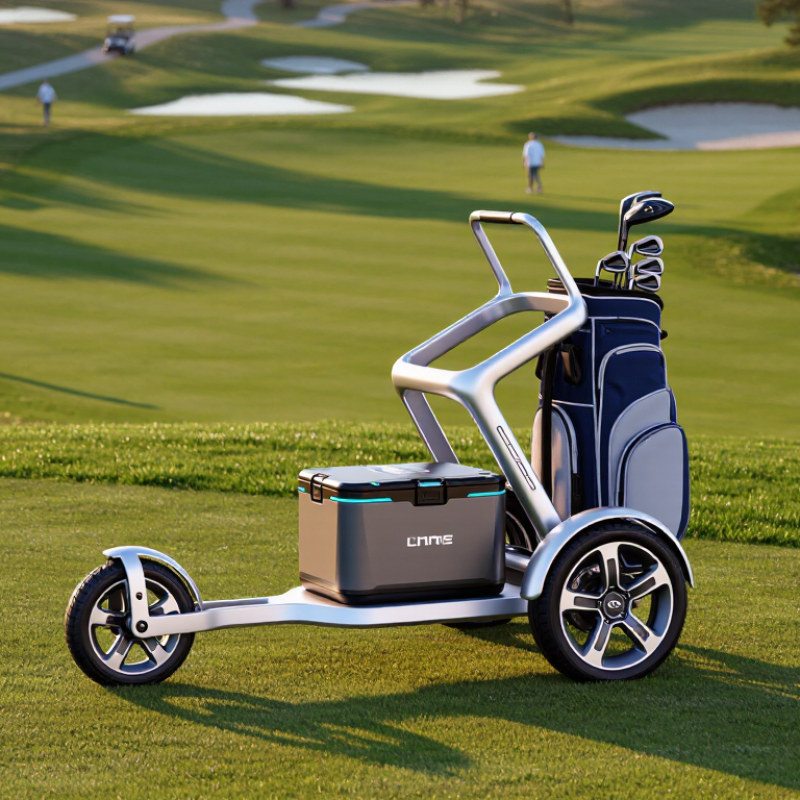
A golf trolley battery must match the cart’s voltage system exactly. A 36V cart requires a 36V battery setup, while a 48V cart needs 48V output. Never treat voltage as flexible. The wrong voltage can overheat the controller, reduce speed, or stop the cart unexpectedly. Check the identification plate, service manual, and existing battery arrangement before ordering. Some carts use several batteries in series, so confirm the total voltage, not one battery’s rating. I once saw a buyer select a single 12V battery for a 48V cart. The dimensions looked right, but the system could not operate.
Amp-hour capacity controls practical driving time. Match the new battery’s Ah rating with the cart’s original specification and daily workload. A higher Ah rating may provide longer range, but it can also increase weight, charging time, and cost. Hilly courses, heavy loads, and frequent starts need more usable capacity than flat paths. Do not compare Ah figures without checking the test conditions. Results can differ. That detail is easy to miss.
Confirm the charger’s voltage and charging profile before purchase. A 48V charger is not suitable for a 36V system. Measure the battery tray, terminal spacing, cable length, and mounting points. Ask for a technical datasheet, cycle-life test method, operating temperature range, and protection details. If the supplier cannot provide clear figures, pause the order. My own mistake was ignoring terminal height; the battery fitted the tray but pressed against the cover. Leave a small installation margin. It prevents avoidable damage during vibration and servicing.
For global buyers, cycle life should lead the golf trolley battery comparison. Practical engineering data often places lead-acid batteries at 500–1,000 cycles, while lithium batteries commonly reach 2,000–5,000 cycles. That means lithium may deliver four to five times more cycling service. Battery University’s technical guidance also stresses that depth of discharge, heat, and charging habits strongly influence these figures. Published cycle ratings are not promises.
Consider a trolley used 100 rounds yearly. A 500-cycle lead-acid battery may provide roughly five years of cycling service, while a 2,000-cycle lithium battery could exceed twenty years theoretically. Calendar aging, storage, and incomplete maintenance reduce those estimates. The U.S. Department of Energy’s battery research reports similarly emphasize temperature and operating conditions as major lifetime factors. Real use is messier.
Lead-acid batteries are heavier, often requiring more effort on slopes and softer ground. Lithium packs usually reduce weight and maintain steadier voltage during a round. However, their higher purchase price can challenge smaller fleets. Ask suppliers for cycle-test conditions, including discharge depth, ambient temperature, and the capacity-retention endpoint. A “5,000-cycle” claim measured under gentle laboratory conditions may not match daily course use. My own buying rule is simple: compare lifetime cost per cycle, not only the invoice. This is easy to overlook.
Compare Typical Battery Cycle-Life Ranges: Lead-Acid vs. Lithium
A cycle represents one complete discharge and recharge. Typical lead-acid batteries provide approximately 500–1,000 cycles, while lithium batteries commonly provide approximately 2,000–5,000 cycles. Actual service life depends on depth of discharge, charging practices, temperature, storage, maintenance, and operating conditions. Buyers should also compare usable capacity, charger compatibility, warranty terms, safety requirements, and total cost over the expected service period.
Lithium batteries are often 50–70% lighter than comparable lead-acid batteries. The difference is noticeable on a wet morning. A trolley feels easier to lift, steer, and place inside a car. The U.S. Department of Energy’s Vehicle Technologies Office reports lithium-ion energy densities around 100–265 Wh/kg, compared with roughly 30–50 Wh/kg for lead-acid systems. Higher energy density means more stored energy with less material. For global buyers, that can reduce shipping weight and handling effort. It may also leave more room for clubs, rainwear, or a folded trolley.
The lighter figure is not automatic. Battery capacity, casing design, charger hardware, and safety controls change the final weight. A 20 Ah lithium unit can still weigh more than expected if its enclosure is oversized. Check the complete operating weight, not only the cell specification. Ask for tested capacity, cycle-life data, and the battery’s transport classification. The International Energy Agency’s Global EV Outlook 2024 highlights continuing improvements in lithium battery energy density, but real products vary widely. That matters. I would not treat “70% lighter” as a guaranteed saving. Compare equal usable energy, not equal amp-hour numbers. Also inspect the trolley’s balance. A very light battery may shift the centre of gravity and make a loaded bag feel awkward on slopes. Small details matter here.
When buying a golf trolley battery internationally, treat safety documents as purchasing essentials, not paperwork. Ask the supplier to identify the exact battery model, chemistry, capacity, and production version. The UL 2271 certificate should match that model and cover the intended light electric vehicle application. Check the certificate holder, issue date, scope, and current validity. A similar-looking certificate is not enough.
Request a complete UN 38.3 test summary for transport. It should cover altitude simulation, thermal testing, vibration, shock, external short circuit, impact, overcharge, and forced discharge. Confirm that the tested battery matches the shipment. Also review IEC 62133-2 evidence for cell and battery safety during normal use and foreseeable misuse. Test reports matter. Marketing claims do not.
Inspect the battery management system, overcharge protection, temperature sensors, short-circuit protection, enclosure strength, and connector design. Confirm charger voltage and charging limits before ordering. Ask for serial-number traceability, production inspection records, and a sample quality-control report. Check whether local import rules require extra labeling or documentation. Never rely on a PDF alone. Some documents may be genuine but outdated, incomplete, or issued for another configuration. I would also request a pre-shipment sample test, although this adds time and cost. That inconvenience can expose poor wiring, weak seals, or an unsuitable connector before the batteries reach your market.
| No. | Buying Tip | What to Verify | Required or Useful Evidence | Why It Matters | Buyer Action |
|---|---|---|---|---|---|
| 1 | Confirm the exact battery specification | Rated voltage, capacity in Ah or Wh, battery dimensions, weight, connector, polarity, maximum continuous discharge current, and charger requirements. | A model-specific datasheet and a dimensional drawing showing the battery enclosure and terminals. | A battery can be electrically compatible but still fail because of incorrect dimensions, connector wiring, current capability, or charger voltage. | Match the battery specification with the trolley motor, controller, charger, mounting space, and operating manual before ordering. |
| 2 | Check UL 2271 applicability and certification status | Whether the complete battery pack is evaluated to UL 2271, the intended use is within the standard’s scope, and the certification applies to the exact model and construction. | A verifiable certification or listing record, model number, revision, cell configuration, and certificate holder or manufacturer information. | UL 2271 addresses rechargeable batteries used in light electric vehicle applications. A generic “UL compliant” statement is not the same as certification of the complete pack. | Ask for the official record or certification details and confirm that the tested pack configuration matches the product being supplied. |
| 3 | Request UN 38.3 transport documentation | Whether the lithium battery has passed the applicable UN Manual of Tests and Criteria, Part III, Sub-section 38.3 tests for transport. | A UN 38.3 test summary containing the battery type, test report reference, manufacturer details, tested configuration, and applicable revision. | UN 38.3 is a transport-safety requirement for lithium cells and batteries. It is not a general product safety certification or a substitute for pack-level safety evaluation. | Obtain the test summary before shipment and confirm packaging, labeling, state-of-charge, and carrier requirements for the destination market. |
| 4 | Review IEC 62133-2 test coverage | Whether the rechargeable lithium cells or batteries were tested to IEC 62133-2:2017, including the applicable chemistry, cell arrangement, protection circuit, and battery construction. | A test report from a competent laboratory that identifies the tested cell type, battery model, electrical limits, protection devices, and test results. | IEC 62133-2 covers safety requirements and tests for portable sealed secondary lithium cells and batteries under intended use and reasonably foreseeable misuse. | Check that the report covers the final battery pack, not only individual cells, and verify whether the destination market accepts this standard. |
| 5 | Evaluate the battery management system | Protection against overcharge, over-discharge, overcurrent, short circuit, excessive temperature, and cell imbalance, together with balancing and low-temperature charging control where applicable. | BMS specifications, protection thresholds, wiring diagram, fault-response description, and evidence of pack-level validation. | The BMS helps keep cells within safe electrical and thermal limits, but it does not replace correct cell selection, enclosure design, fusing, or qualified testing. | Compare BMS limits with the trolley’s peak current, charger output, environmental conditions, and expected duty cycle. |
| 6 | Inspect charging, enclosure, and environmental protection | Dedicated charger compatibility, charging temperature range, ingress protection, impact resistance, terminal insulation, ventilation or thermal management, and safe mounting. | Charger specifications, enclosure rating where claimed, installation instructions, operating-temperature data, and maintenance requirements. | Golf trolleys may encounter rain, vibration, mud, storage heat, and repeated charging. Moisture, loose mounting, or an incompatible charger can increase safety and reliability risks. | Use only the specified charger, protect the pack from water immersion and crushing, and follow the stated charging and storage temperature limits. |
| 7 | Confirm traceability and destination-market obligations | Batch traceability, production date, cell lot, serial number, warranty terms, safety instructions, recycling obligations, import documents, and local regulatory requirements. | Label artwork, declaration or conformity documents where required, safety data information, invoice and packing data, recall process, and after-sales contact details. | Compliance requirements differ by country and may depend on transport mode, battery energy, product configuration, and whether the buyer is importing or reselling the product. | Have a qualified compliance or logistics specialist review the shipment and verify current rules with the relevant authority or carrier before dispatch. |
Important: UL 2271, UN 38.3, and IEC 62133-2 address different aspects of battery safety and transport. None of these references alone confirms that a battery is suitable for every golf trolley, charger, country, or transport route.
When comparing golf trolley batteries, do not judge value by the purchase price alone. Calculate the energy you can actually use. Lithium batteries often provide about 80–90% of their rated capacity without stressing the cells.
For example, a 51.2-volt, 100Ah battery has 5.12kWh of nominal energy. At 80% usable capacity, it delivers about 4.10kWh. At 90%, it provides roughly 4.61kWh. That difference is 0.51kWh per charge. Over many rounds, this gap affects range, charging frequency, and operating cost. Check the manufacturer’s usable-capacity data, not only the label.
Here is a practical cost calculation. If the battery costs 900 dollars, and shipping, charger, and fitting add 180 dollars, the installed cost is 1,080 dollars. At 80% usable capacity, the cost is about 263 dollars per usable kWh. At 90%, it falls to approximately 234 dollars per usable kWh.
Include expected cycle life, charging losses, storage conditions, and possible replacement parts. A cheaper battery may become expensive if it offers less usable energy or needs earlier replacement.
I have seen buyers overlook cable upgrades and trolley compatibility. That mistake is easy to make. It is also costly.
Usable capacity is not perfectly constant, because temperature, age, load, and driving terrain change the result. Your calculation should leave room for those variables.
Match the battery system exactly. A 36V trolley needs 36V output. A 48V trolley needs 48V output. Never guess voltage. Check the identification plate, service manual, and existing battery arrangement.
No. Higher voltage can overheat the controller or stop the trolley unexpectedly. Several batteries may work in series. Confirm their total voltage, not one battery’s rating.
Amp-hour capacity affects practical driving time. Match the original Ah rating and your daily workload. Hills, heavy loads, and repeated starts require more usable capacity. Higher Ah may add weight, charging time, and cost.
Ah results can differ between testing methods. Two batteries with the same rating may perform differently. That detail is easy to miss. Ask for the test conditions before comparing range.
Measure the battery tray, terminal spacing, cable length, and mounting points. Check terminal height too. Leave a small installation margin. A battery may fit the tray but press against the cover.
The charger voltage must match the trolley system. A 48V charger is unsuitable for a 36V system. Also confirm charging limits and the battery’s charging profile. Charging mismatch can create heat or shorten battery life.
Request documents covering transport, battery safety, and the intended light electric vehicle application. The listed model, chemistry, capacity, and production version must match the shipped battery. Similar paperwork is not enough.
Review evidence for altitude, heat, vibration, shock, impact, short-circuit, overcharge, and forced-discharge testing. Check issue dates and scope. Some documents may be genuine but outdated.
Look for a battery management system, temperature sensors, overcharge protection, and short-circuit protection. Inspect the enclosure, seals, wiring, and connector design. Small defects can become serious during vibration.
Yes, when practical. A pre-shipment sample test can reveal weak seals, poor wiring, or unsuitable connectors. It adds time and cost. I would still consider it worthwhile, though I might overlook one detail again.
Choosing the right Golf Trolley Battery requires more than comparing prices. Global buyers should first match the battery’s 36V or 48V voltage and Ah capacity with the golf cart’s specifications to ensure reliable performance and avoid compatibility issues. Battery chemistry is also important: lead-acid models commonly provide around 500–1,000 cycles, while lithium options may deliver approximately 2,000–5,000 cycles when properly used and maintained. Lithium batteries can also reduce overall cart weight by about 50–70%, improving efficiency, handling, and transport convenience.
Safety and long-term value should guide the final decision. Buyers should verify compliance with recognized standards such as UL 2271, UN 38.3, and IEC 62133-2, along with appropriate documentation for international shipping and use. When comparing costs, calculate value based on usable energy rather than rated capacity alone. Lithium batteries typically offer 80–90% usable capacity, which can provide more practical energy and lower replacement frequency over time.

Liao Battery