China has become a major sourcing destination for global buyers seeking reliable Lithium Battery solutions. Its manufacturing base covers lithium iron phosphate, NMC, cylindrical, prismatic, and pouch cell technologies. However, supplier selection should involve more than comparing factory prices. A polished website cannot replace verified production records, technical documents, and consistent product testing.
From practical sourcing experience, serious buyers inspect cell origin, battery management systems, energy density, cycle life, and thermal safety. They should request recent test reports, UN 38.3 documentation, IEC or UL evidence where applicable, and clear quality-control procedures. Factory visits can reveal important details, including clean assembly areas, automated welding lines, aging cabinets, and labeled finished-goods storage. These details often say more than a sales presentation.
Look beyond the quotation.
Reliable Chinese manufacturers usually explain warranty limits, minimum order quantities, customization boundaries, and delivery risks without avoiding difficult questions. Sample testing remains essential because performance can change between laboratory data and real operating conditions. Packaging quality, export experience, spare parts, and after-sales communication also affect total purchasing value. No supplier is perfect. Even experienced buyers can overlook changing material costs or capacity claims. Therefore, this guide evaluates leading China Lithium Battery manufacturers through a practical, evidence-based lens. It considers technical capability, certifications, production scale, communication, and long-term reliability. The goal is not to promote one factory blindly, but to help global buyers build a safer, clearer, and more accountable sourcing process.
China’s Lithium Battery Manufacturing Landscape
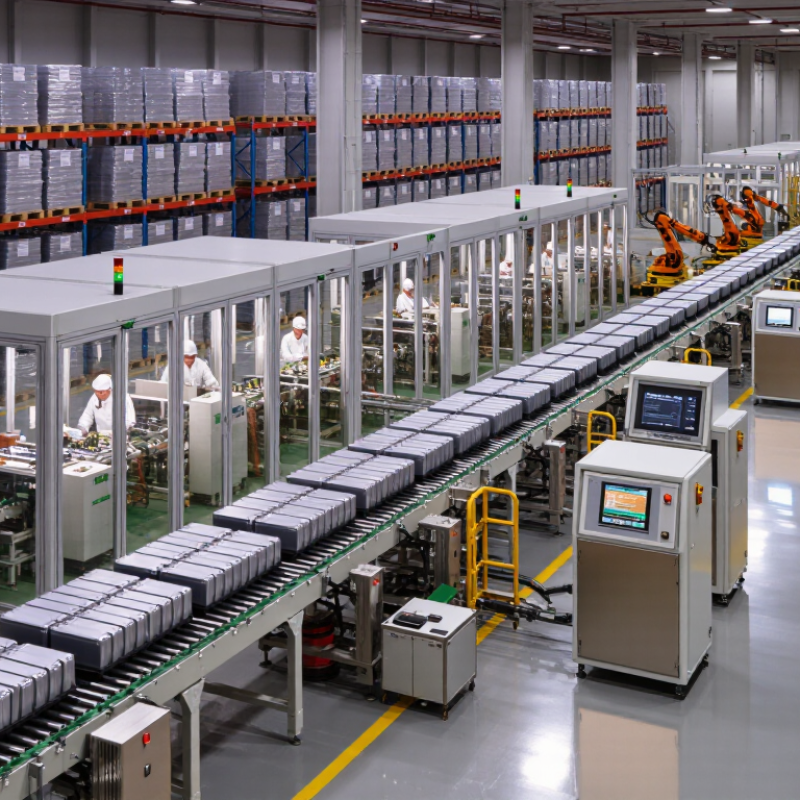
China’s lithium battery manufacturing landscape is broad, layered, and highly competitive. It includes material processors, cell producers, module assemblers, battery-pack integrators, and testing laboratories. This structure helps global buyers compare solutions more efficiently. It also creates complexity. Similar specifications may hide differences in cell chemistry, production controls, or warranty conditions.
Experienced buyers inspect more than energy density. They review electrode materials, cell format, cycle-life data, thermal management, and protection systems. Factory visits can reveal practical details, such as humidity control, automated welding, and barcode-based traceability. Reliable suppliers should provide test reports, safety documentation, sample records, and clear production timelines. These documents matter when a battery moves from a sample room to real equipment.
Tips: Ask for samples from the intended production line, not only laboratory units. Confirm capacity at a stated temperature and discharge rate. Request thermal cycling and abuse-test results where relevant. Check how rejected cells are isolated and recorded. A low price may look attractive, but inconsistent cell matching can increase maintenance costs. No factory is perfect. Buyers should question unclear data and leave room for independent verification. A careful audit may feel slow, yet it often prevents expensive changes after shipment.
China’s lithium-ion battery output grew rapidly from 2021 to 2023, reflecting the expansion of its manufacturing sector. Figures are rounded industry-wide output reported by China’s Ministry of Industry and Information Technology; they are not company-level data.
How to Evaluate Chinese Battery Manufacturers
China Top Lithium Battery Manufacturers for Global Buyers
How to Evaluate Chinese Battery Manufacturers
Evaluating a Chinese battery manufacturer requires more than comparing unit prices. Ask for factory registration, production capacity, quality records, and export experience. A reliable supplier should explain its cell sources, assembly process, and testing responsibilities clearly.
Request recent test reports for capacity, cycle life, thermal safety, and transport compliance. Check whether reports match the exact model you plan to purchase. During a factory visit, inspect clean areas, barcode tracking, aging racks, and finished-goods storage. Small details matter. A loose label can create serious traceability problems later.
Order samples before signing a large contract. Measure voltage consistency, capacity, charging temperature, and physical dimensions with independent equipment. Compare the results with the supplier’s data. Differences may reveal weak process control. Also review warranty terms, replacement procedures, inspection rights, and packaging standards. Confirm that documentation supports the destination market’s legal requirements.
A polished factory can still hide gaps. Supplier claims need evidence. Audits should include production workers, maintenance logs, rejected-cell records, and emergency procedures. Price remains important, but unusually low pricing may indicate thinner materials, limited testing, or unstable sourcing. I would also reassess the supplier after the first shipment, because performance under real logistics conditions can expose problems that samples miss.
Leading Manufacturers and Their Product Specialties
China’s lithium battery manufacturers serve different needs, from compact cells for handheld equipment to large-format systems for energy storage. Some specialize in lithium iron phosphate cells, valued for stable operation and long service life. Others focus on nickel-rich chemistries, which can offer higher energy density for weight-sensitive applications. Their product ranges may include cylindrical, prismatic, or pouch cells, each with distinct packaging and integration requirements.
The details matter. A prismatic cell may simplify a tightly arranged cabinet, while cylindrical cells can suit modular packs. Manufacturers also differ in battery management systems, thermal design, and customization depth. Ask for test data under conditions close to your intended use, not just headline capacity figures. Check cycle-life definitions, temperature limits, and consistency across sample cells. A polished specification sheet is useful, but it cannot replace independent validation. Even experienced buyers sometimes overlook connector placement or enclosure dimensions until late in a project. That is costly. Factory audits, quality records, and clear after-sales procedures help assess a supplier’s reliability, though no single document proves long-term performance. Compare these factors against your operating profile and service expectations.
Comparing Certifications, Capacity, and Global Reach
China’s lithium battery manufacturers differ widely in certification depth, production scale, and export experience. Buyers should verify certificates against the exact cell, module, or battery pack. Common references include IEC 62133, UN 38.3 transport testing, and ISO management standards. A certificate from an accredited laboratory carries more weight than a website badge.
Capacity figures need careful reading. A factory may advertise several gigawatt-hours annually, yet available capacity can be lower during peak orders. During supplier audits, inspect automated welding, cell grading, thermal testing, and batch traceability. Ask for recent yield data, not only designed output. Small details matter. A missing serial record can weaken warranty investigations.
Global reach also depends on service, not shipment volume. Experienced exporters usually provide customs documents, safety data, multilingual manuals, and regional compliance support. Check whether their engineers can respond across time zones. Review recall procedures and spare-part access before signing. Public information is sometimes incomplete, and sales teams may overstate delivery coverage. Independent audits and sample testing reduce this risk. Performance claims should be tested under your actual temperature, charging, and load conditions. A supplier with fewer factories may still offer stronger control. That possibility deserves attention.
China Top Lithium Battery Manufacturers for Global Buyers - Comparing Certifications, Capacity, and Global Reach
This brand-neutral comparison lists verifiable standards and buyer-checkable measures. Certification, production capacity, and export coverage vary by manufacturer, facility, product, and destination; confirm current evidence directly with each supplier.
| Comparison area |
Recognized standard or metric |
What it covers |
What global buyers should verify |
| Quality management |
ISO 9001 |
General quality-management-system requirements; it is not a battery-product safety approval. |
Check the certificate’s issuing body, validity, covered site, and scope of activity. |
| Automotive supply quality |
IATF 16949 |
Quality-management requirements for automotive production and relevant service parts; applicability depends on the supplier’s role and site. |
Confirm that the actual manufacturing site and relevant production scope are covered, rather than relying on a group-level claim. |
| Industrial battery safety |
IEC 62619:2022 |
Safety requirements and tests for secondary lithium cells and batteries used in industrial applications, including stationary applications. |
Match the tested battery model and intended use to the product being quoted; request the test report or certificate details. |
| Portable battery safety |
IEC 62133-2 |
Safety requirements for portable sealed secondary lithium cells and batteries under its scope. |
Check that the product category, cell or pack configuration, and model match the relevant evaluation. |
| Transport readiness |
UN Manual of Tests and Criteria, subsection 38.3 |
Tests for lithium cells and batteries in transport. UN 38.3 is a transport test requirement, not a general product-quality certification. |
Request the applicable test summary and verify it corresponds to the shipped cell or battery type and configuration. |
| Production capacity |
Annual cell or pack capacity, stated in GWh/year or units/year |
A capacity figure is meaningful only when its basis is clear. Announced, under-construction, installed, and actually produced capacity are different measures. |
Ask for the site, product type, measurement period, current output, utilization, and whether the figure is actual production or planned capacity. |
| Global market access |
Destination-specific approvals and compliance documentation |
Requirements depend on battery chemistry, application, end product, and destination market. A single certificate does not establish access to every market. |
Request a market-by-market document list, product-model references, and confirmation of who is responsible for importer and end-product compliance. |
| EU market requirements |
EU Battery Regulation (EU) 2023/1542 |
Establishes requirements for batteries placed on the EU market, with obligations and implementation dates that vary by requirement and battery category. |
Confirm the battery category, applicable dates, required technical documentation, and the roles of the manufacturer and importer. |
| International operating footprint |
Overseas manufacturing, service, and logistics locations |
An export history, sales office, service center, and local factory represent different levels of regional presence. |
Identify operating locations, local support arrangements, spare-parts availability, lead times, and the legal entity responsible for warranty service. |
Key Considerations for International Buyers
China Top Lithium Battery Manufacturers for Global Buyers
Key Considerations for International Buyers
International buyers need to assess more than unit price when choosing a lithium battery supplier. The IEA’s Global EV Outlook 2024 reports that electric-car battery demand reached about 750 GWh in 2023, up 40% from 2022. Growing demand puts pressure on supply chains, but large production capacity alone does not guarantee consistent quality. A low quote can look convincing; check what it includes.
Compare chemistry and cell format against your equipment, operating temperatures, and pack design. Request cell-level capacity and resistance data, batch traceability, warranty terms, and safety-test documents relevant to the destination market. Cycle-life claims are useful only when test conditions match, including temperature, charging rate, and depth of discharge. Ask for sample testing before a large order. Review how defects are handled, too; that detail is easy to overlook.
Tips: Put specifications and acceptance limits in writing. Check sample results independently when practical, and confirm shipment documents before production begins. A neat datasheet is not the whole story.
Conclusion
This article explores China’s Lithium Battery manufacturing landscape and the factors that make it an important sourcing option for global buyers. It explains how to assess manufacturers by examining product range, engineering capabilities, quality-control processes, production capacity, and experience serving international markets. It also outlines how different suppliers may specialize in applications such as energy storage, electric mobility, or industrial equipment, helping buyers narrow their search according to technical and commercial needs.
The article compares key considerations such as relevant certifications, manufacturing scale, delivery capabilities, and overseas support. It also highlights practical steps for international buyers, including defining performance requirements, checking documentation, evaluating communication and after-sales service, and confirming that a supplier can meet expected timelines. A careful, criteria-based assessment can help buyers identify suitable partners and build a more reliable sourcing process.

 Liao Battery