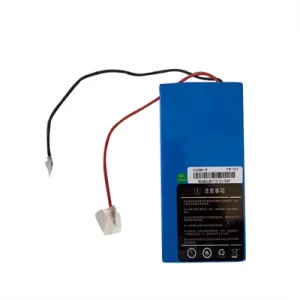
Explore our premium lithium iron phosphate (LiFePO4) engineered battery series, built for electric mobility, smart-grid telecom towers, and automated warehousing systems.
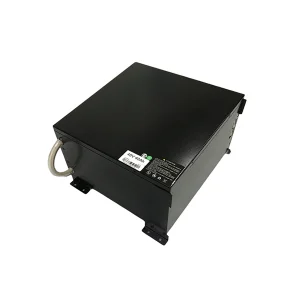
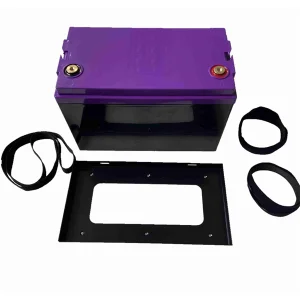
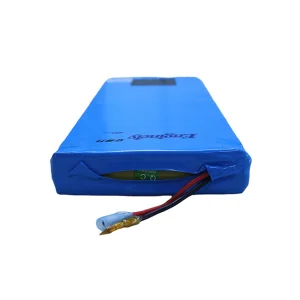
Industrial procurement departments today are faced with severe bottlenecks. From the volatility of critical raw material extraction (lithium carbonate, battery grade >99.5%) to the tightening regulatory environments of the European Union (EU Battery Regulation 2023/1542) and North America (IRA compliance), securing a reliable, tier-one lithium factory partner is no longer a matter of simple cost negotiation. It is a critical component of risk mitigation.
For large-scale system integrators, automotive OEMs, and utilities seeking robust Energy Storage Systems (ESS), battery cells must meet stringent metrics of safety stability, lifecycle longevity, and energy density. Low-tier manufacturers compromise on cell consistency, leading to thermal mismatches, early pack deterioration, and dangerous thermal runaways in multi-megawatt installations.
At Hangzhou LIAO Technology Co., Ltd., we tackle these pain points by offering absolute traceability in raw material processing, standardized engineering margins, and verified cell compatibility. We ensure that our global partners secure a stable supply of LFP chemistry solutions designed to endure heavy industrial workloads.
Unstable cell matching can reduce system lifespan by up to 40%. Our high-consistency testing protocol ensures voltage differentials remain <5mV across modules.
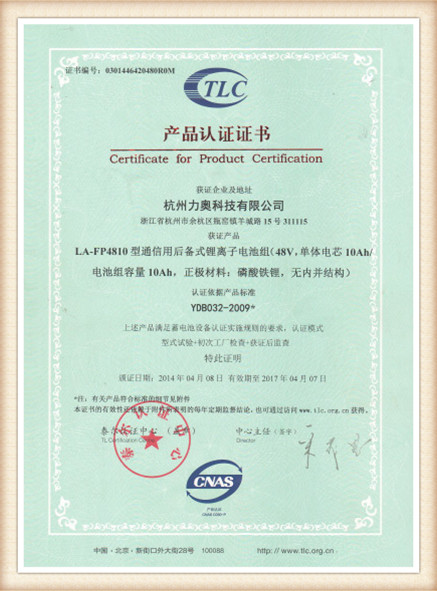
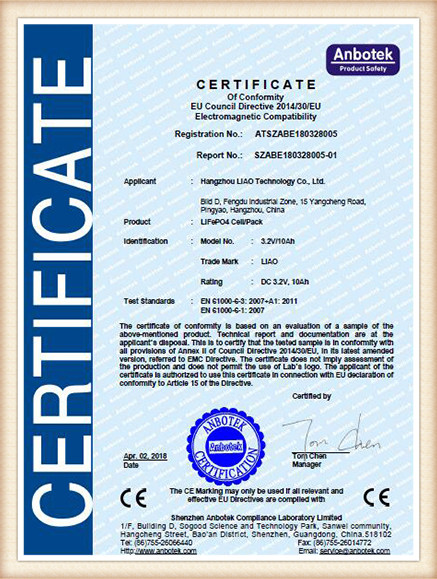
Compliance validation for global markets including CE, ISO, and UN38.3. Every battery batch is certified for safe international transit and operation.
Founded in 2009, Hangzhou LIAO Technology Co., Ltd. has established itself as an authoritative leader in customized lithium iron phosphate (LiFePO4) battery manufacturing.
Over a span of 15 years, our technical footprint has expanded into more than 20 countries. We focus strictly on the development, design, and assembly of custom battery packs that match the complex mechanical and electrical specifications required by modern heavy industry.
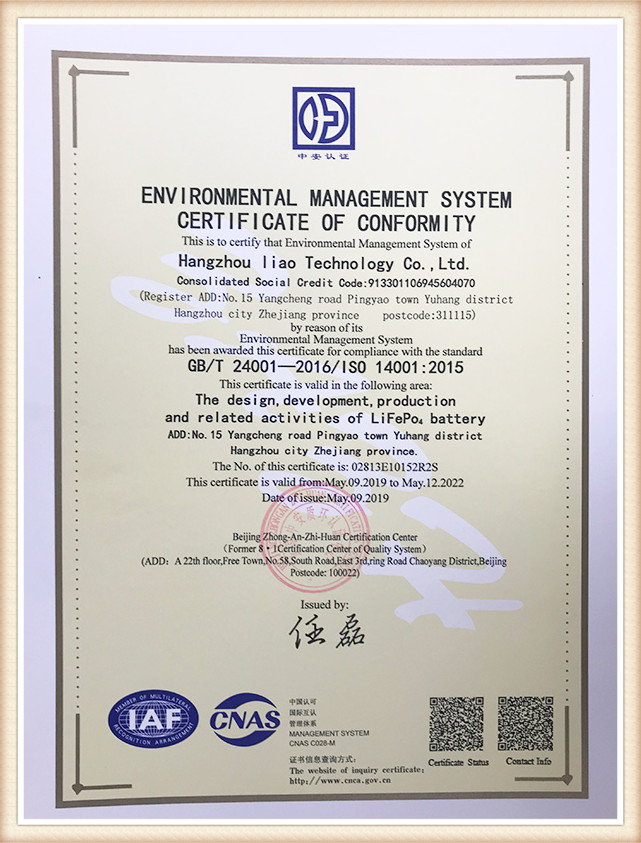
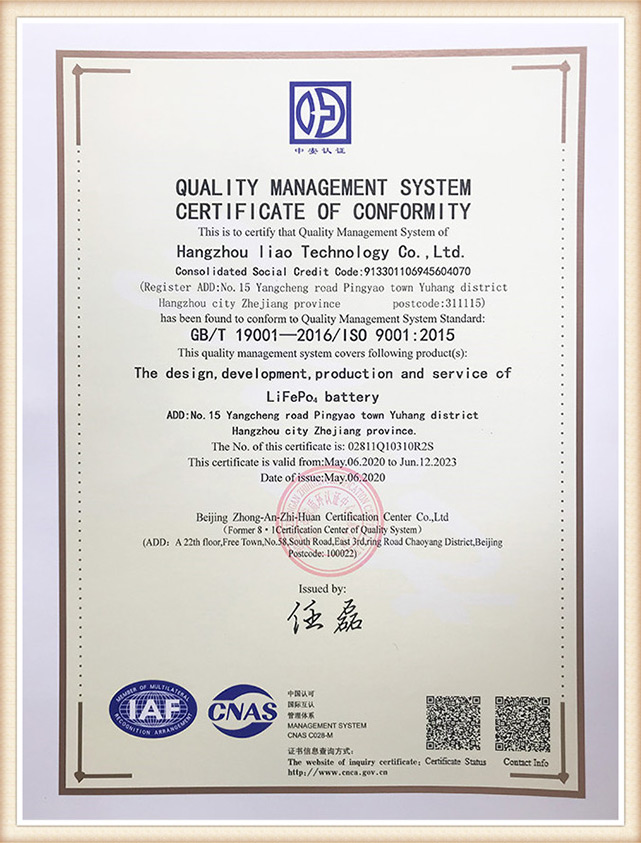
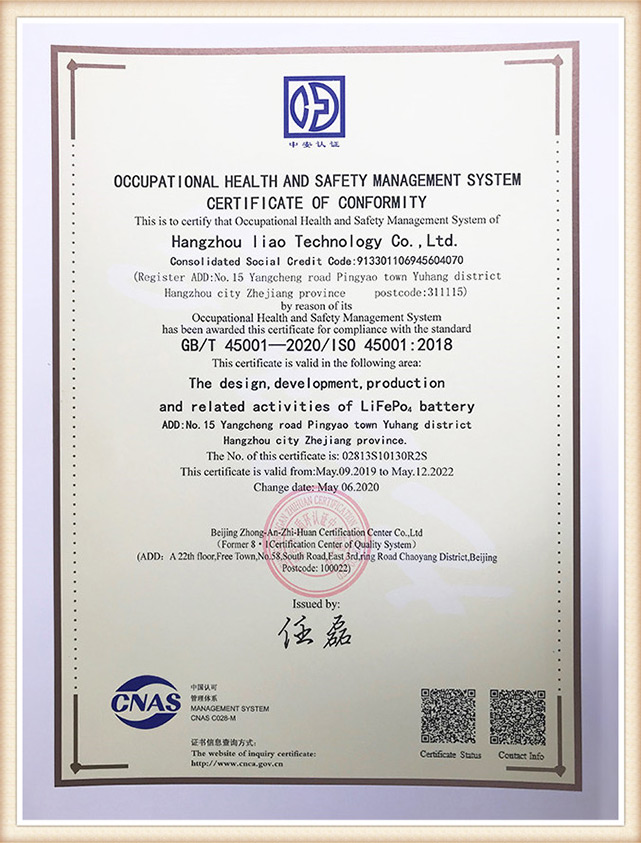
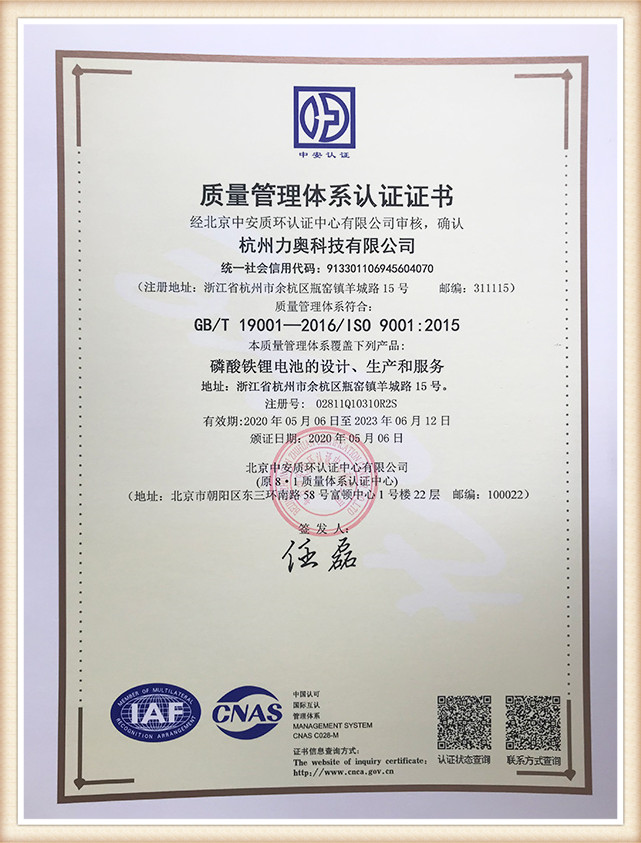
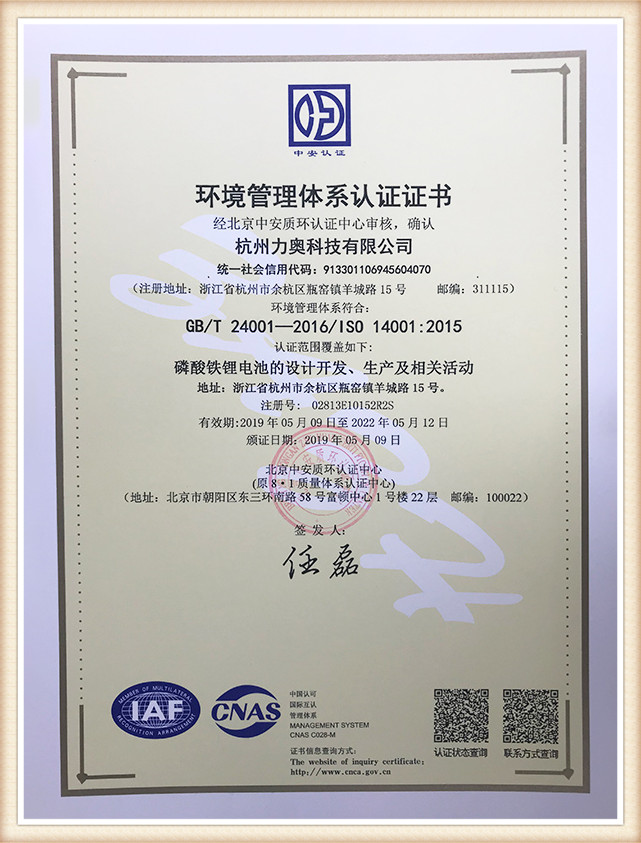
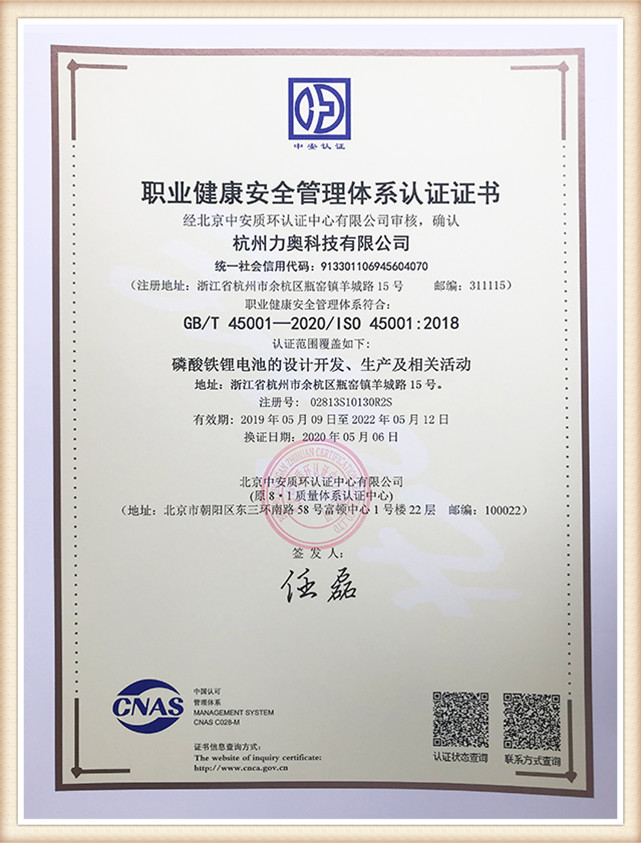
Our core capability is anchored in our quality assurance infrastructure. Operating under strict conformance to ISO 9001:2015 for Quality Management, ISO 14001:2015 for Environmental Management, and ISO 45001:2018 (formerly ISO 18001) for Occupational Health and Safety, we run clean, traceable, and repeatable production lines.
Our experienced R&D engineering divisions work alongside international procurement agents to offer tailored engineering solutions—from layout space limitations in electric boats to high-voltage, multi-cell balancing interfaces in telecom grids.
Engineering customized battery architectures tailored to dynamic power demand curves, extreme environmental parameters, and rigorous safety margins.
High-discharge current delivery and robust thermal enclosures. Delivers stable voltage throughout the entire discharge cycle to tackle steep terrain shifts.
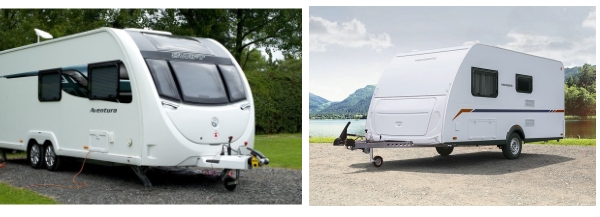
Zero emissions, minimal acoustic signature, and ultra-high power density. Extends off-grid capability while saving weight compared to lead-acid batteries.
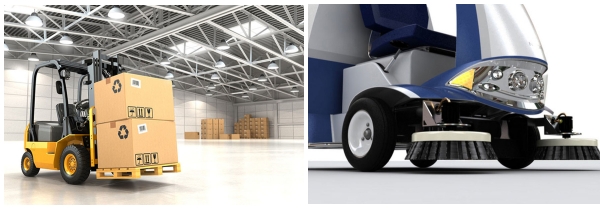
Engineered for continuous rapid opportunity charging (0.5C - 1C) inside modern warehouses, lowering downtimes and optimizing fleet operation costs.
Fully sealed IP67 structures with specialized multi-point BMS monitoring to survive humid, high-saline marine environments securely.
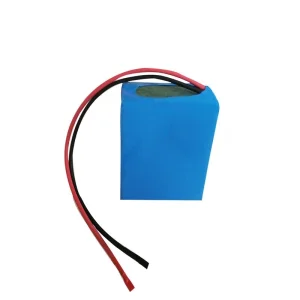
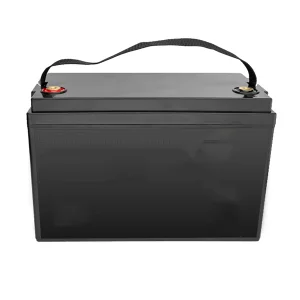
Traditional lead-acid storage systems suffer from severe degradation under deep discharges (peaking at <500 cycles at 80% DOD) and suffer from Peukert's effect under heavy loads. Our modern replacement packs, such as the 12V 100Ah Lead Acid Replacement LiFePO4 module, present a direct dimensional fit while doubling usable runtime, reducing structural weight by 60%, and completely eliminating hazardous off-gassing and routine acid maintenance checks.
For industrial operators managing telecom backups, solar micro-grids, or uninterruptible power supply (UPS) servers, shifting to lithium chemistry reduces total cost of ownership (TCO) by up to 55% over a typical 10-year facility lifespan.
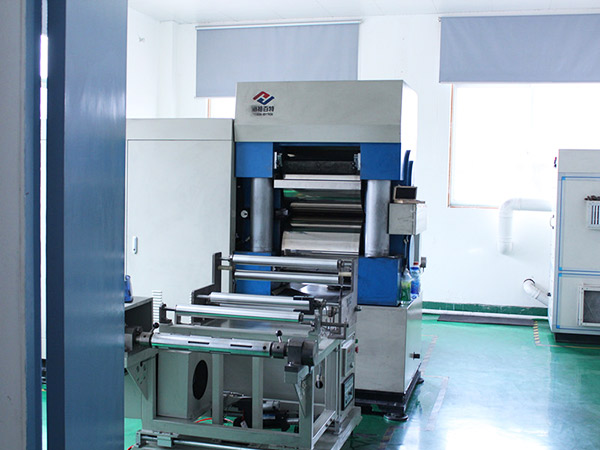
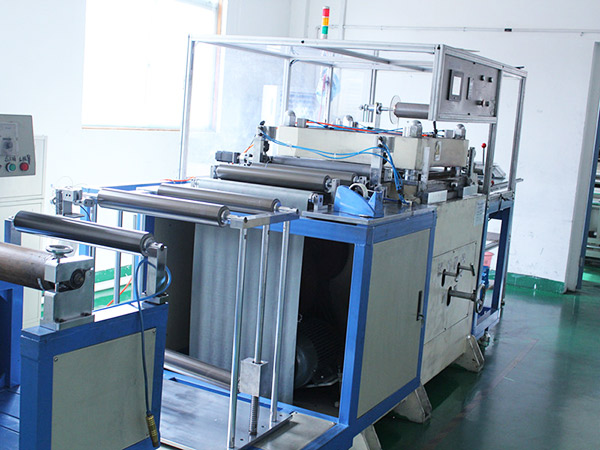
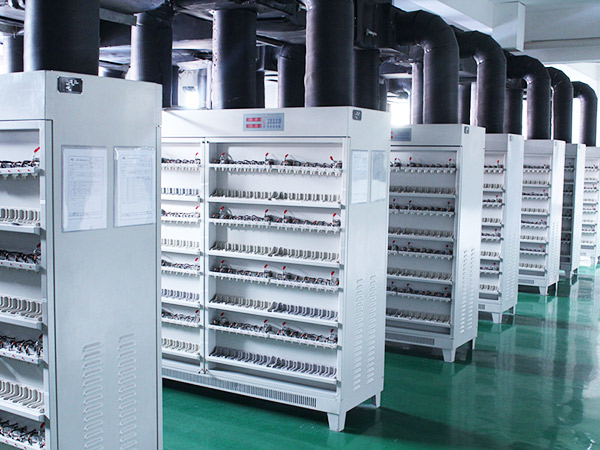
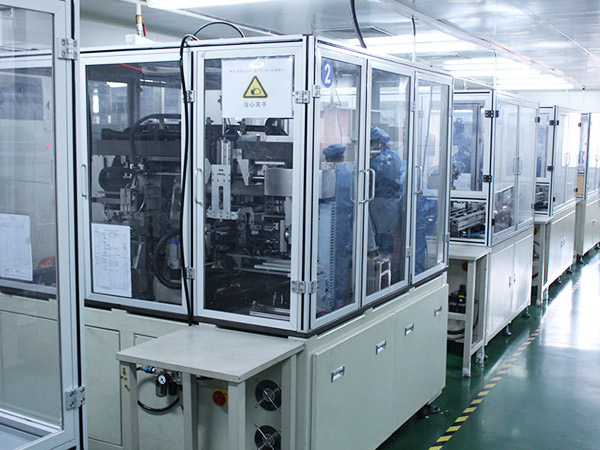
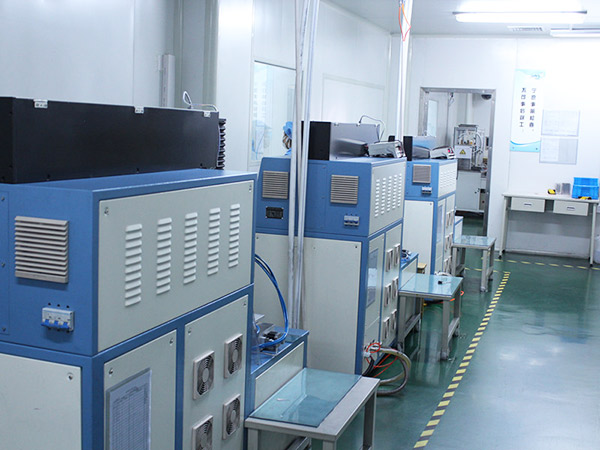
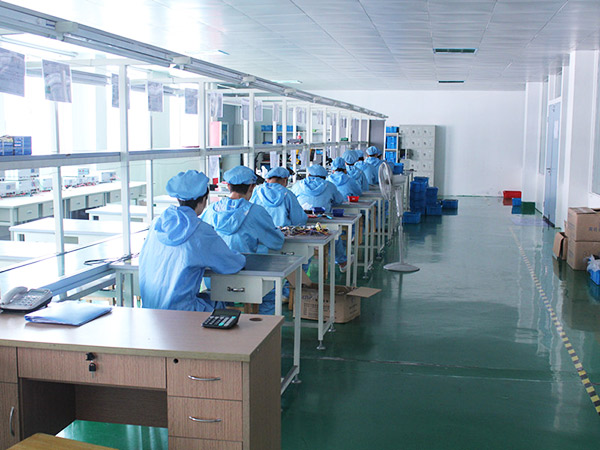
Inside our ISO-compliant manufacturing center: how cell configuration and material integrity determine operational safety and longevity.
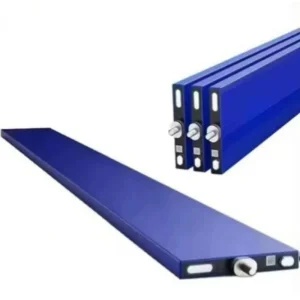
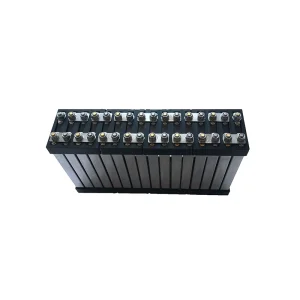
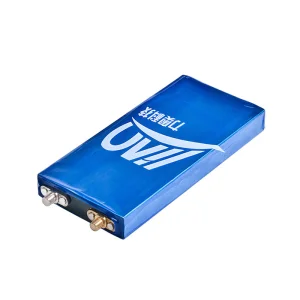
Our bolt-type prismatic cells (such as the 3.2V 10Ah cells) offer compact volumetric layouts, rigid packaging, and robust connections. In high-vibration systems like AGVs and motorbikes, prismatic construction minimizes mechanical stress points.
LiFePO4 features an inherently stable crystal lattice structure that resists oxygen release even at elevated temperatures. Tested under strict needle-puncture protocols, LIAO batteries maintain integrity without thermal runaway, operating efficiently from -40°C to +85°C under specialized build structures.
Each battery assembly integrates a custom-engineered Battery Management System (BMS) that monitors individual cell voltages, controls passive balancing currents, protects against overcharging, deep discharge, and manages precise short-circuit cutoffs.
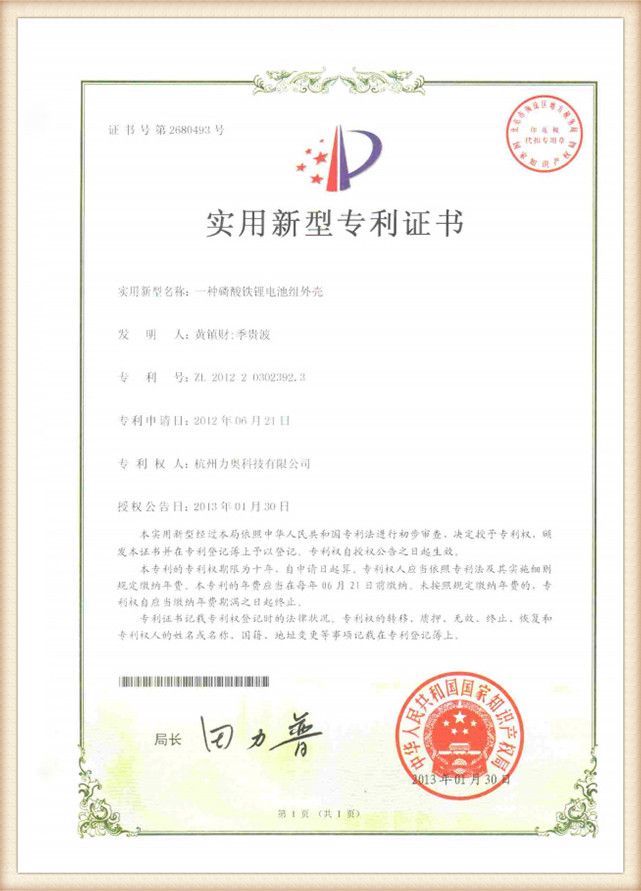
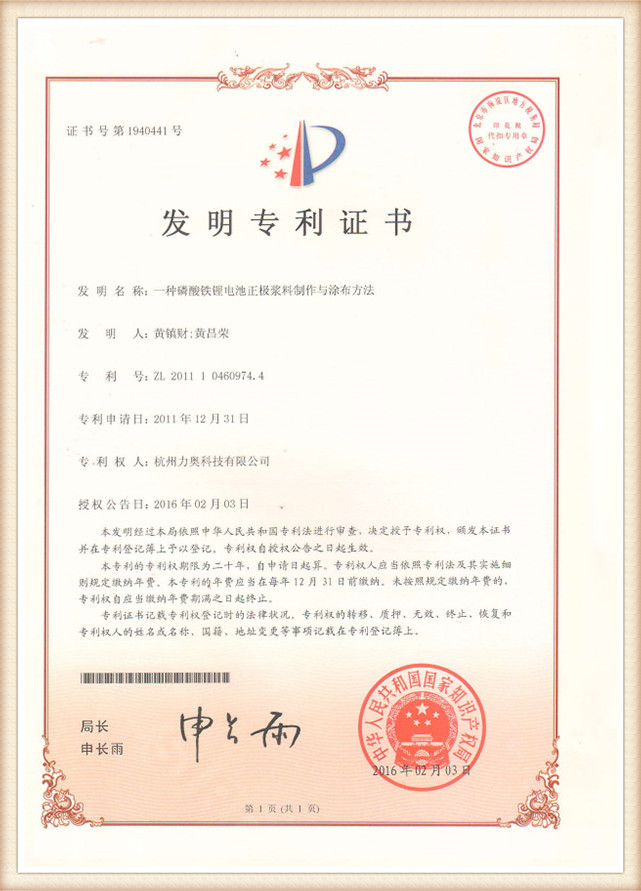
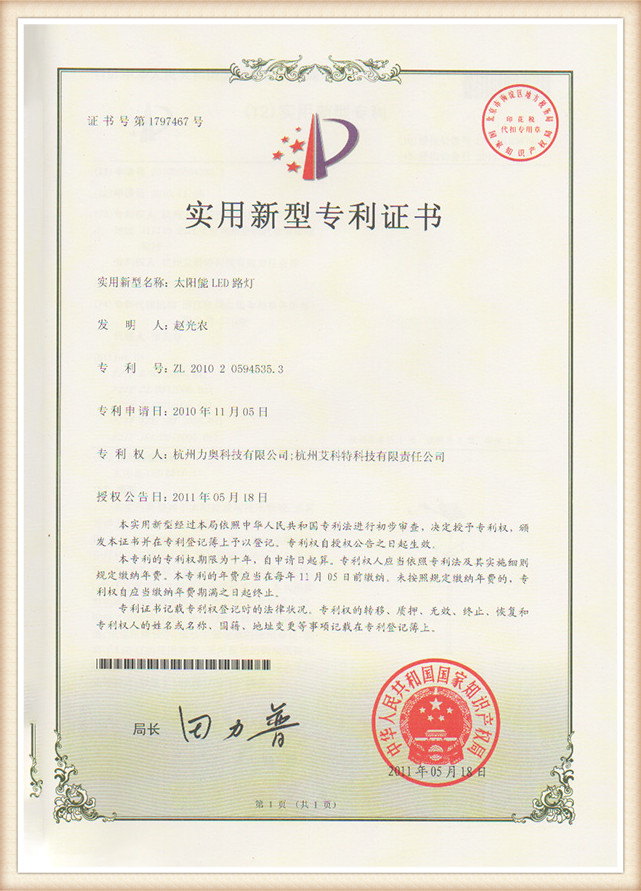
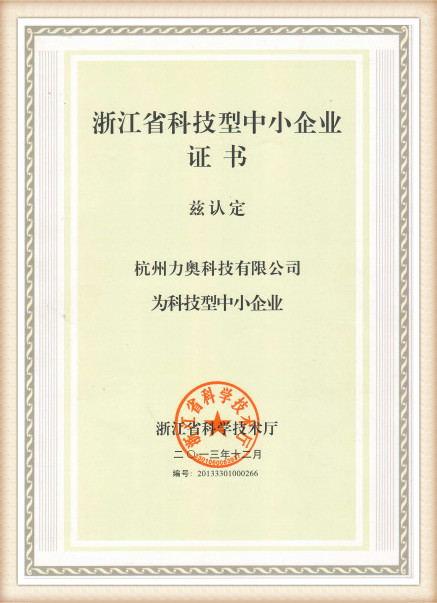
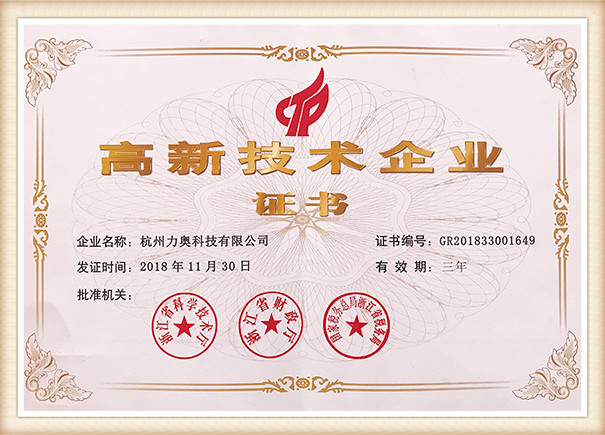
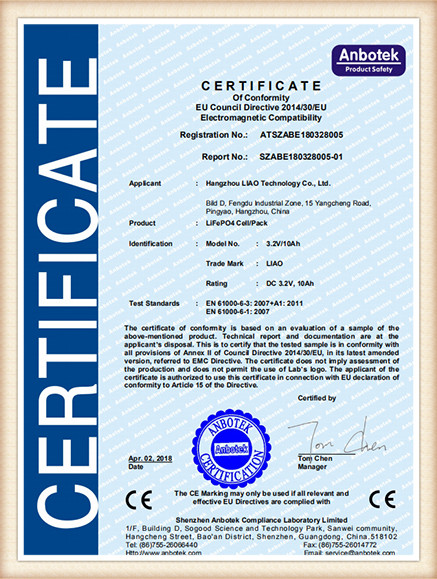
Third-party verified compliance validation showing certificates of qualification, patents, and structural test reports.

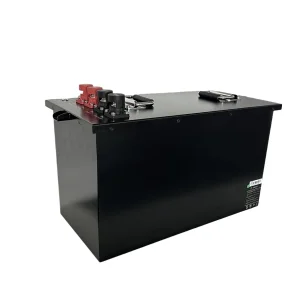
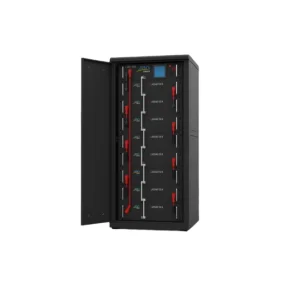
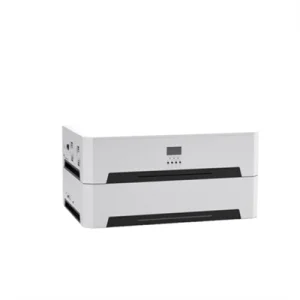
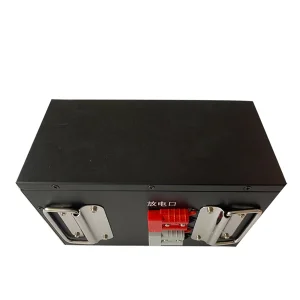
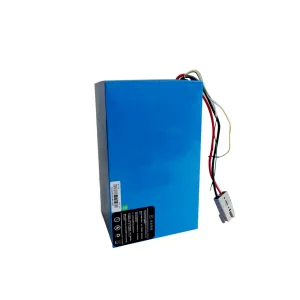
Explore high-voltage modular setups, replacement blocks, and large energy storage components optimized for commercial scale.
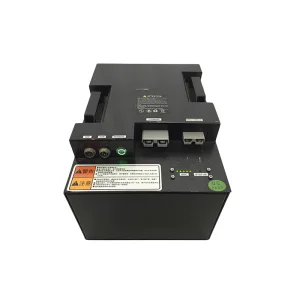
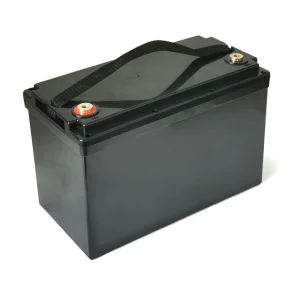
Addressing the complex engineering and compliance questions raised by international procurement managers and project integrators.
Our cells are based on lithium iron phosphate (LiFePO4) chemistry, which features a covalent P-O bond. Unlike metal-oxide chemistries (NMC/LCO), this bond does not release oxygen at high temperatures. In the event of a physical puncture or electrical short-circuit, the system will not sustain combustion, ensuring stable safety in high-density installations.
Every module is designed with an integrated BMS that performs passive or active cell balancing. During charge and discharge phases, cell voltages are matched down to the millivolt level to prevent capacity fade and mismatching across series-parallel connections.
We configure system voltages (12V to 348V+), capacity demands (10Ah to 600Ah+), physical geometry restrictions, charging speed tolerances, customized BMS protection levels, and communication protocols (CANbus, RS485, Modbus) to match custom system interfaces.
While standard operations perform optimally between -20°C to +60°C, our specialized low-temp cells can discharge down to -40°C. For hot climates, high-temperature formulations function effectively up to +85°C without compromising safety margins.
Under a standard 1C rate discharge and 100% Depth of Discharge (DOD), our single cell delivers 2800+ cycles while retaining over 80% of its initial capacity. Standard lead-acid solutions under similar loads typically yield only 300 to 500 cycles before failing.
We provide full documentation, including UN38.3 test records, Material Safety Data Sheets (MSDS), CE markings, and compliance reports to guarantee smooth transit and installation across major global regions.
 Liao Battery